Why Your Best Closer Is Sometimes Your Worst Trainer
The top rep on every sales team carries a private playbook — part skill, part instinct, part habits they cannot explain. Promoting them to trainer rarely produces more top reps. Here is why, and how AI coaching changes the math.
James Biesinger
Co-Founder & CEO
Scroll
There is a reason the "shadow your top rep" model has stopped scaling. Tacit knowledge does not transfer the way explicit knowledge does.
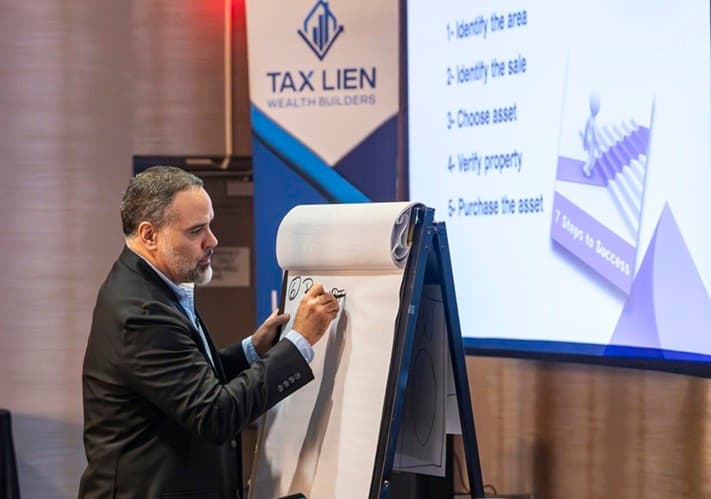
Every sales org runs a version of the same experiment. There is one rep at the top of the leaderboard — the closer, the franchise, the one prospects ask for by name. At some point a leader says: we should bottle what they do. The rep gets a coaching role, a training session, a peer pod, a shadow program. The team trains under them.
A quarter later, the rest of the team has not moved. The top rep still leads. Everyone else is roughly where they were. The intervention quietly gets retired and replaced with the next idea.
This happens because the assumption is wrong. The best closer on a team almost never knows, in any transferable way, what they do.
The tacit knowledge problem
What top reps possess is a high concentration of tacit knowledge — patterns built over thousands of conversations, often invisible to the rep themselves. Tacit knowledge is the difference between knowing how and knowing what. A top rep can run a beautiful discovery call but cannot articulate the seven micro-decisions they made in the first four minutes. They will tell you I just listen or I follow the energy. Both true. Both useless to a rep trying to learn.
This is well-studied. In the literature, it shows up in fields as different as surgery, jazz, chess, and trial law. Experts in these fields perform at a level they cannot explain. When they try to teach, they teach the content (the rules, the frameworks, the steps) but not the patterns (the things they have absorbed that produce the gap between competent and great).
When the top rep tries to teach, the best they can usually offer is the rule that did not work for them — the script they were given as a junior rep, the framework they outgrew. Or they offer pattern advice ("feel the room") that the receiving rep cannot operationalize.
The team learns the rules. The patterns stay locked inside the top rep.
Why peer shadowing has diminishing returns
The other classic move is to have weaker reps listen to the top rep's calls. This sounds like it should work — expose the team to the right way, behavior follows. In practice it produces mild improvement for the first three or four calls and then plateaus.
The reason: listening to an expert is not the same as practicing the behaviors that produce expertise. A junior rep hearing a top rep close a tough deal hears the words but cannot see the decisions that preceded the words. They cannot rewind to the moment the top rep chose to not respond to a buying signal. They cannot hear the version of the call that did not happen, where the rep took the bait and lost the deal.
Without the counterfactual, the model is incomplete. The junior rep copies the words and gets different results.
This is also why call libraries underperform their promise. The library captures the best calls. It does not capture the bad version of those calls that the top rep avoided. The shape of expertise is in the avoidance — and the avoidance is invisible.
What top reps are bad at noticing
Most top reps have at least one ingrained behavior that is wrong but works for them. They monologue too long, but their charisma carries it. They skip discovery questions, but they have enough pattern recognition to fill the gap. They commit too early to a champion, but they have the rapport to recover.
When this rep coaches, they pass on the wrong behavior. The new rep, without the charisma, the pattern recognition, the rapport, simply fails at the wrong behavior.
This is not a knock on top reps. It is a property of how high performers develop. The path that produces the top rep is idiosyncratic. The behaviors that compose it are partly skill and partly compensation. The compensation works because it is paired with the skill. Strip out the skill and the compensation is just a bad habit.
This is the central reason top-rep-as-trainer programs underperform. The top rep is teaching from their own developmental path, which only worked because of who they are.
What does transfer
The reason this matters is not to demote the top rep. It is to understand what does scale and what does not.
What does transfer:
Explicit playbook steps. The discovery questions to ask. The objection-handling frameworks. The pricing conversation structure. These are what to do, and they transfer with reasonable fidelity through documents, scripts, and standard onboarding.
Worked examples with annotation. A specific call, broken down into the moments where a specific decision was made, with the alternative path called out. This is closer to how surgeons train. It is also expensive to produce in volume.
Repetition with feedback. A new rep practicing the discovery question, getting feedback on each rep of the rep, until the question becomes ingrained. This is the highest-fidelity transfer mechanism in any skill domain.
What does not transfer:
Personality-driven moves. The way the top rep makes the room laugh. The way they read the room. These are not skills; they are the rep.
Compensatory behaviors. The shortcuts that work for the top rep because they are also paired with the rep's strengths.
Pattern-level intuition.Feel the room. Push when they hesitate. Pull back when they lean in. These are correct. They are also not teachable in a workshop.
The pattern-level intuition is the hardest part. It is also the part that separates good reps from great ones. The traditional answer was: it cannot be taught, only built through reps over years. This is the part AI is starting to change.
Where AI coaching changes the math
What AI sales coaching does that human coaches cannot do at scale is provide the high-volume, in-the-moment feedback that is the only known mechanism for converting pattern-level intuition into transferable behavior.
A new rep runs 40 calls in their first month. Every call is scored against the team's playbook. Every call surfaces the specific moments where the rep diverged from the pattern. The rep does not learn from listening to the top rep. They learn from running their own calls and getting corrected, faster than a human manager can possibly correct them.
This is the closest thing to deliberate practice that sales has ever had. It does not replace the top rep. It replaces the top-rep-as-trainer model, which was a workaround for the absence of high-volume feedback.
The top rep gets to go back to closing. The team gets coaching that compounds. The thing that did not scale — tacit knowledge — stops being a bottleneck, because the system is teaching the patterns through the rep's own conversations, not through the top rep's example.
If you have run the let's have our top rep train the team play and watched it underperform, this is the explanation. It is not a failure of the rep or the program. It is a structural feature of how expertise transfers. The fix is not a better trainer. It is a different mechanism.